
Descrizione
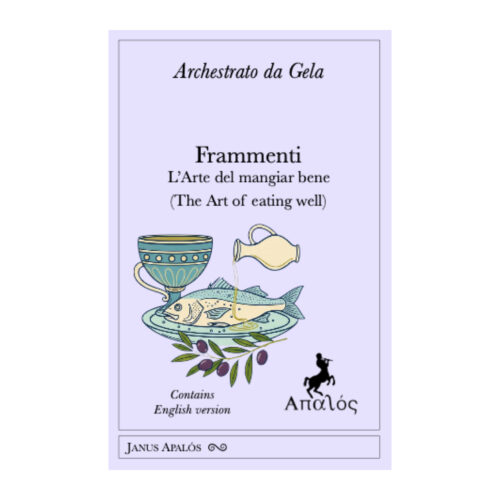
L’Arte del Mangiar Bene. Viaggio gastrono-mico nell’Antichità. Archestrato di Gela (IV sec. a.C.) è il primo gourmet della storia. Viaggiatore siceliota, definì la regola d’oro del piacere: il pesce eccellente esige solo olio e sale. Dai crostacei perfetti ai migliori tonni di Sicilia, i suoi celebri Frammenti sono un manifesto di qualità e minimalismo. Per la prima volta, un classico in una riscrittura moderna, fluida e immediatamente com-prensibile per il lettore di oggi.
The Art of Eating Well A gastronomic jour-ney through Antiquity. Archestratus of Gela (4th century BC) is the first gourmet in history. A Sicilian traveler, he defined the golden rule of pleasure: excellent fish requires only oil and salt. From perfect shellfish to the best tuna of Sicily, his famous Fragments are a manifesto of quality and minimalism. For the first time, a classic is presented in a modern, fluent, and im-mediately comprehensible rewriting for today’s reader.
––––––––––––––––––––––––––––––––––––––
Archestrato di Gela (IV sec. a.C.) è riconosciuto come il primo gourmet della storia. Intellettuale siceliota e viaggiatore, fu l’autore dell’Hedypatheia (o Gastro-nomia), un poema didascalico in versi che celebrava i migliori ingredienti e le loro esatte località nel Mediterraneo. La sua filosofia culinaria era radicalmente minimalista: sosteneva che il pesce eccellente richiedesse solo olio e sale, e che un banchetto raffinato non dovesse superare i cinque commensali. La sua opera è giunta a noi soltanto in frammenti.
Archestratus of Gela (4th century BC) is recognized as the first gourmet in history. A Sicilian intellectual and traveler, he authored the Hedypatheia (or Gastronomia), a didactic poem in verse that celebrated the best ingredients and their exact locations throughout the Mediterranean. His culinary philosophy was radically minimalist: he argued that excellent fish required only oil and salt, and that a refined banquet should not exceed five guests. His work has only survived in fragments.


